01
Molecular Mechanisms
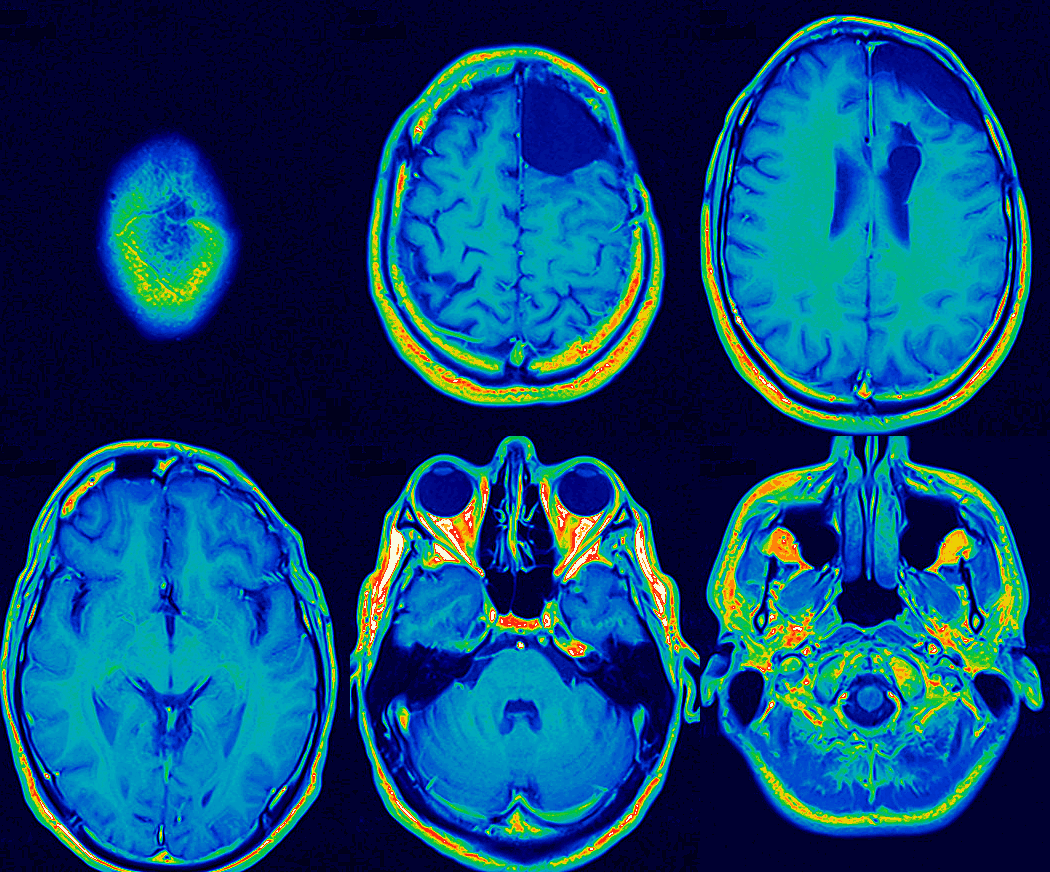
Uncovering the molecular mechanisms of neurological recovery following cardiac arrest, including the role of the orexin pathway and energy stores such as caloric restriction and mitochondrial Zn²⁺.
The first cardiac arrest and resuscitation lab at UC Irvine — investigating the mechanisms underlying consciousness, coma, and global stroke, from basic science to the patient's bedside.
“The only way to innovate new therapies is through fundamental, translational research.”
The Waveflow mission UC Irvine · Neurocritical Care
Waveflow is the first cardiac arrest and resuscitation laboratory at UC Irvine, investigating the mechanisms underlying consciousness, coma, and global stroke, with a particular emphasis on cardiac arrest and cardiopulmonary resuscitation.
By combining basic science, translational research, and clinical practice, our work stays uniquely aligned with the realities of patient care — every discovery is driven by a question we face at the bedside.

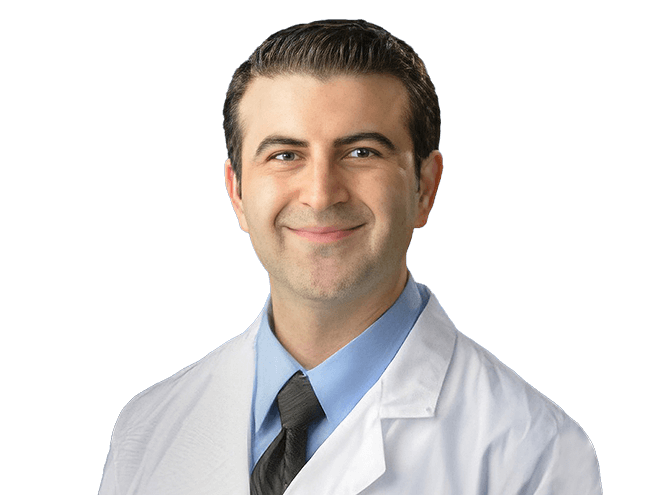
A practicing neurointensivist in the Neuro-ICU at UC Irvine Medical Center, bridging the laboratory and the patient's bedside.
Our program investigates neurological recovery after cardiac arrest across three complementary scales — from molecules to the conscious brain.
Uncovering the molecular mechanisms of neurological recovery following cardiac arrest, including the role of the orexin pathway and energy stores such as caloric restriction and mitochondrial Zn²⁺.
Studying hemodynamic mechanisms — cerebral blood flow, brain metabolism, and neurovascular coupling — during and after cardiac arrest and cardiopulmonary resuscitation.
Uncovering changes in consciousness during cardiac arrest, including alterations in brain connectivity measured using quantitative EEG analysis.
We have incorporated multidisciplinary techniques across the lab to maximize our translational potential — pairing rigorous laboratory science with direct clinical application.

Waveflow began as a UC Irvine senior-design project — born in the Akbari Lab and the Beckman Laser Institute — with one goal: make the EEG as quick and easy to use as a stethoscope. It started from a simple observation: every tool clinicians use to read the brain leaves a gap.
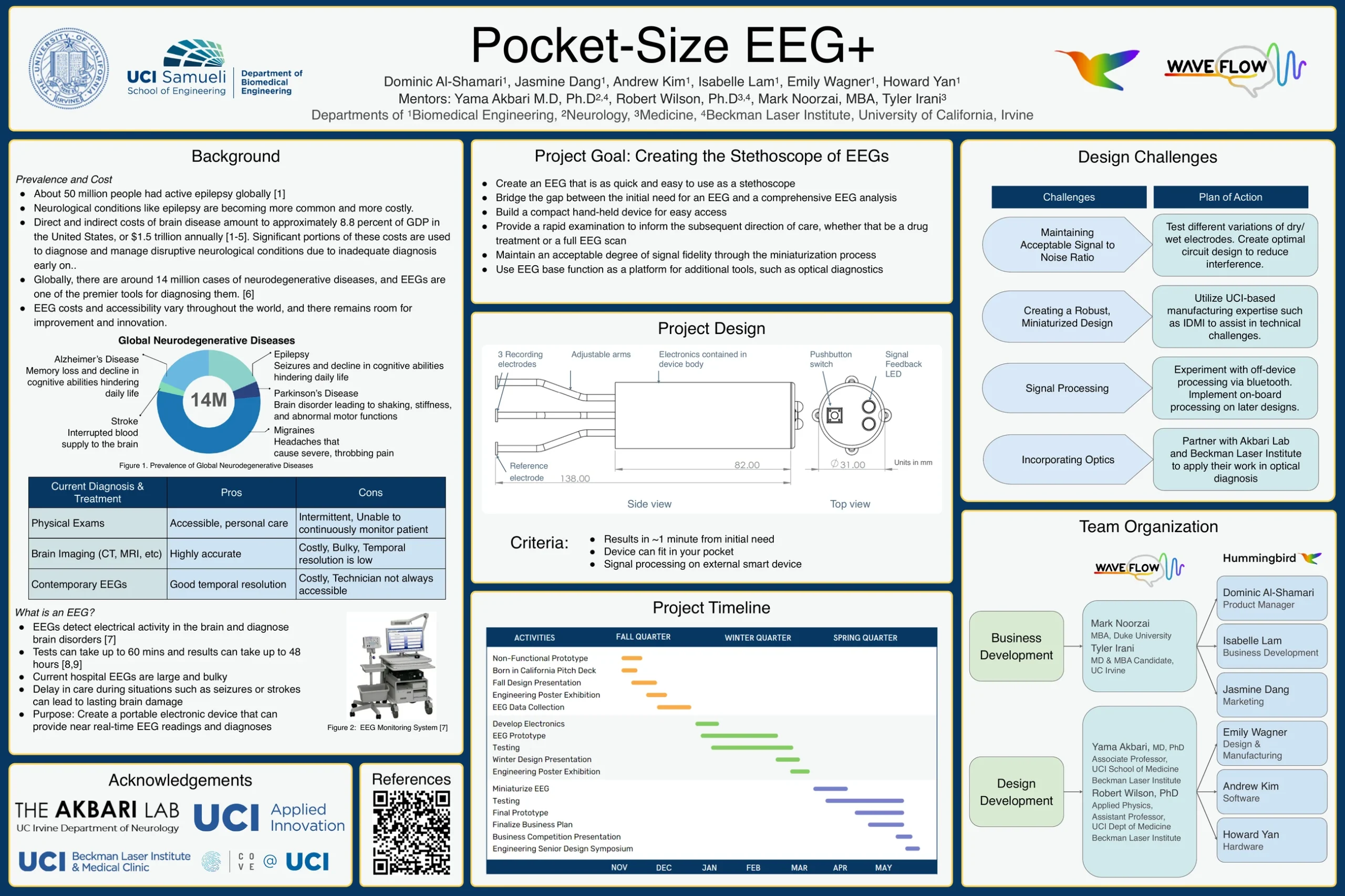
That gap is exactly what we set out to close — pairing EEG with photonics to read the brain's electrical activity alongside its blood flow, oxygenation, and metabolism: continuous, portable, and available at the bedside the moment it's needed. We believe that fusion is where the future of neurological medicine is headed.
Selected peer-reviewed publications spanning the lab's work in cardiac arrest, resuscitation, and the recovery of consciousness.
Rafi M, Yi JD, et al., Akbari Y. — Cardiometabolic Diseases (1st Ed.), pp. 427–438.
Medvedeva Y, Yin H, et al., Akbari Y, Weiss J. — 42(26):5281–5292.
Han S, Contreras M, et al., Choi B, Wilson R, Akbari Y.
Azadian M, Tian G, et al., Steward O, Akbari Y. — 14:609670.
Hosseini M, Wilson RH, Crouzet C, Amirhekmat A, Wei KS, Akbari Y. — 17(2):539–562.
Ghoreishi A, Arsang-Jang S, et al., Akbari Y. — 29(12):105321.
Neurocritical Care Society Curing Coma Campaign. — 33:1–12.
Shuttleworth CW, Andrew RD, Akbari Y, et al. — 32(1):317–322.
Crouzet C, Wilson RH, et al., Akbari Y, Choi B. — 9(1):e012691.
Wilson RH, et al., Akbari Y, Tromberg BJ. — 4(4):045008.
Kang YJ, Tian G, et al., Steward O, Akbari Y.
Lee DE, et al., Lopour BA, Akbari Y. — 7(3):172–181.
Hong D, Stradling D, et al., Akbari Y. — 8:184.
Crouzet C, Wilson RH, et al., Choi B, Akbari Y. — 7(11):4660–4673.
Maybhate A, Chen C, Akbari Y, et al. — pp. 7112–5.
Akbari Y, Geocadin RG. — 39(11):2558–9.
Wilson RH, Crouzet C, et al., Akbari Y, Choi B.
Wilson RH, Crouzet C, et al., Choi B, Akbari Y.
Green KN, Demuro A, Akbari Y, et al., LaFerla FM. — 132(2):i1.
Oddo S, Caccamo A, et al., Akbari Y, LaFerla FM. — 39(3):409–21.
Leissring MA, et al., Akbari Y, LaFerla FM. — 99(7):4697–702.
A multidisciplinary team of principal investigators, clinical researchers, postdoctoral scholars, and dozens of dedicated trainees.
More than 100 alumni have trained and contributed to the lab over the years.
Selected funding and support, plus the current and upcoming projects advancing our mission.
Established by Gary Carmell in memory of his wife, lost unexpectedly to cardiac arrest — sustaining the lab's mission to improve care for cardiac-arrest patients. (2019–present)
NIH NIBIB R21 (EB024793) · Principal Investigator.
NIH NINDS R01, 2022–2026 · Co-Investigator.
Hamamatsu Photonics translational feasibility study · Lead PI.
“The only way to innovate new therapies for patients suffering from such severe acute brain injury is through fundamental, translational research.”
Questions about our research, collaborations, or joining the lab? Send us a message.